
Key Takeaways
- Neurobiological Reset: Horses provide real-time biofeedback that helps regulate the nervous system and retrain the brain’s threat response.
- Evidence-Based Efficacy: Clinical studies show significant symptom reduction in both veterans and civilians who engage in structured equine programs.
- Integrative Power: This modality enhances traditional CBT and DBT by allowing you to practice emotional regulation skills in a safe, experiential setting.
- Quality Matters: Ensuring your provider is accredited by organizations like PATH Intl. or EAGALA is critical for safety and therapeutic success.
How PTSD Equine Therapy Facilitates Trauma Recovery
The Neurobiology Behind Equine Healing
Before diving into the practicalities, it helps to have a clear assessment tool for the neurobiological impact of trauma. Use this self-check: Do you notice chronic hypervigilance, trouble calming your body, or difficulty connecting with others? If so, these may be signs of a nervous system shaped by trauma’s effects on the brain and body.
PTSD equine therapy taps into the neurobiology of trauma recovery by engaging both the mind and the nervous system. Trauma can keep the body in a high-alert state, making it hard for the brain’s threat-detection system—the amygdala—to reset. Horses, as prey animals, are highly attuned to their environment and respond immediately to subtle changes in human body language and emotion. This real-time feedback helps participants learn to regulate their own physiological arousal, essentially retraining their brain’s stress response pathways8.
What’s especially powerful is that horses naturally model calm, grounded presence. When someone with PTSD enters a session, the horse’s steady breathing and nonjudgmental awareness invite co-regulation. This means your nervous system can begin to mirror the horse’s calm, fostering new connections in the brain’s emotional regulation network. Research shows ptsd equine therapy can support the reduction of PTSD symptoms by over 20% on average for veterans, highlighting its real, measurable impact1.
If you have struggled with traditional talk therapy, this approach is ideal for re-engaging the body’s innate healing systems and building a sense of safety from the inside out. Next, let’s explore how horses act as emotional feedback systems in the therapeutic process.
Horses as Emotional Feedback Systems
Start with this quick reflection tool: During interactions, do you notice others reacting to your body language, tone, or even your mood shifts before you do? If so, you’re already primed to understand what makes ptsd equine therapy so distinct—horses act as living mirrors for human emotion, offering real-time, nonverbal feedback.
Horses are wired to detect subtle changes in their environment. When you enter the arena, they pick up on tension, calm, anxiety, or trust without needing words. This feedback loop is powerful. For individuals working through trauma, it’s often hard to identify or express emotions. The horse’s response—moving closer, stepping away, or pausing—gives instant, honest cues about your internal state. In a therapeutic setting, this helps you recognize and process emotions that might otherwise stay hidden.
“The horse acts as an ’emotional sponge,’ reflecting the emotional and physiological state of the participant, allowing for immediate recognition of internal patterns.”7
This approach works best when you struggle to connect with or verbalize your feelings in traditional therapy. Horses provide a safe, judgment-free zone where emotional patterns play out visibly. For many, seeing these patterns in action can break through emotional numbness or avoidance, which are common in PTSD.
The time commitment for ptsd equine therapy varies, but sessions typically last 45–90 minutes and are often structured weekly. While no prior horse experience is needed, you’ll want to ensure access to a facility with trained staff and a calm, well-cared-for therapy horse. As you continue, you’ll see how the evidence base supports its use with both veteran and civilian populations.
Evidence Supporting PTSD Equine Therapy
Research Outcomes for Veterans & Civilians
Before diving into the numbers, try this quick outcomes checklist: As you review program results, look for reductions in standardized PTSD scores, sustained progress at follow-up, and evidence of benefit across both veteran and civilian groups. These are strong signals of a therapy that delivers meaningful, lasting change.
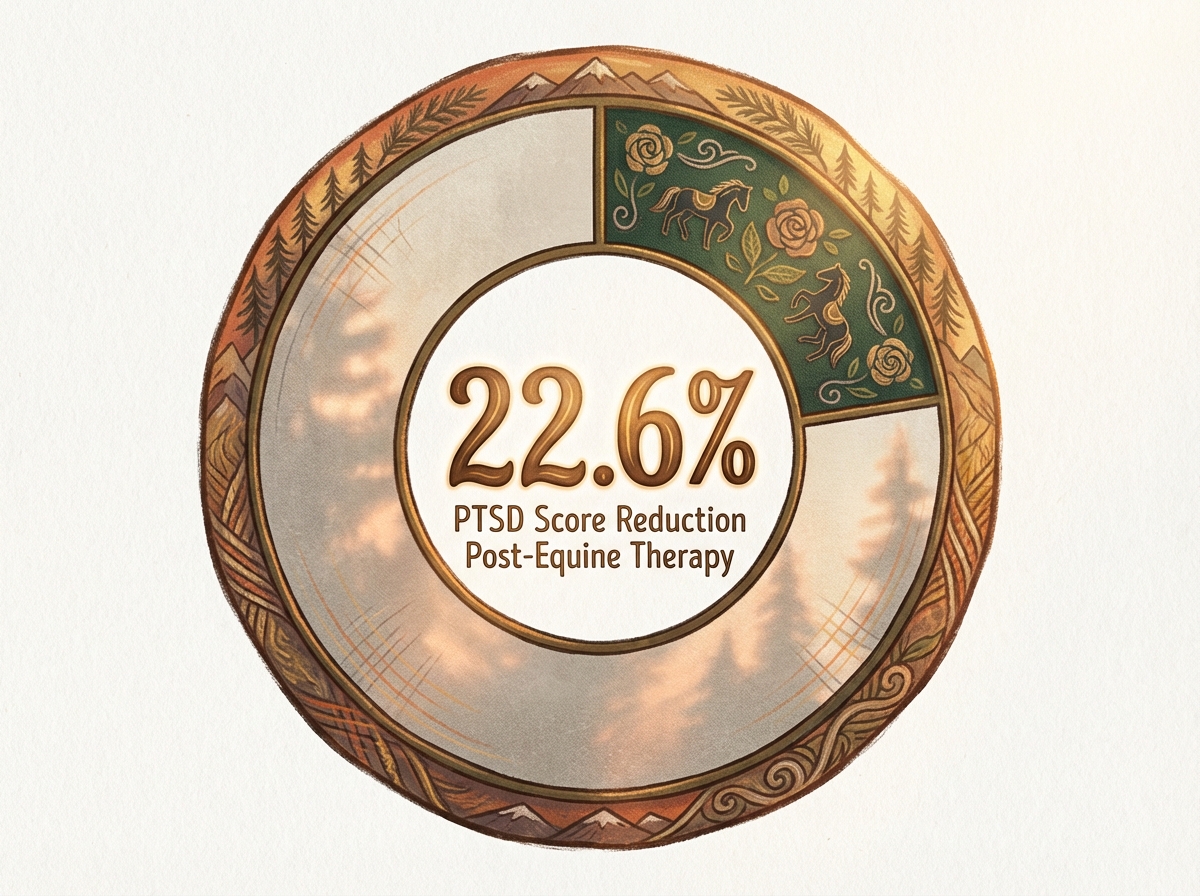
The research is clear—ptsd equine therapy consistently yields positive results for trauma survivors from a wide range of backgrounds. In a recent meta-analysis of multiple studies with military veterans, participants saw an average 22.6% reduction in PTSD symptoms, a clinically meaningful improvement that can translate into greater daily functioning and hope for recovery1. Another large-scale review found that over half of veterans experienced a marked drop in both PTSD and depression symptoms that lasted at least three months after completing an eight-week program3.
It’s not just veterans who benefit. Civilian populations, including those healing from childhood trauma or first responder stress, report better emotion regulation, less avoidance, and higher self-efficacy after working with horses7. This solution fits those who may feel stuck or disconnected after traditional therapy—especially when trauma is complex or longstanding.
Sessions generally require a commitment of 8–12 weeks, with 45–90 minutes per session. You’ll need access to a safe facility, trained equine professionals, and horses comfortable in therapeutic roles. This path makes sense for those seeking experiential, body-based healing rather than solely talk-based interventions. The body of evidence continues to grow, but the signal is strong: ptsd equine therapy can offer real relief, especially for clients who haven’t responded fully to other approaches.
Comparing Completion Rates to Traditional
Begin with this simple comparison tool: Ask yourself—how often have you or your peers disengaged from traditional PTSD treatment versus experiential therapies? Understanding these numbers can guide your treatment decisions and set realistic expectations for engagement.
| Treatment Modality | Dropout/Non-Completion Rate | Key Engagement Factor |
|---|---|---|
| Traditional Talk Therapy | 50% – 60% (Veterans)5 | Often requires verbalizing trauma immediately. |
| PTSD Equine Therapy | Significantly Lower (Early Data) | Immersive, non-verbal, and physically active. |
Dropout rates remain a significant challenge in conventional PTSD care. Studies show that between 50% and 60% of veterans discontinue standard trauma treatment before finishing, while around one-third of civilian clients do the same5. This means that many people never experience the full benefit of traditional approaches. In contrast, early data from ptsd equine therapy programs indicate higher completion rates, with participants more likely to finish the course of treatment.
Consider this method if you have struggled to stay engaged in talk therapy or report emotional numbness. The unique environment in ptsd equine therapy—outdoors, physically active, and emotionally safe—often makes the process feel less intimidating and more rewarding. One possible reason? Horses provide immediate, nonjudgmental feedback, which can help participants remain present and invested during sessions7.
Time investment is comparable to other outpatient therapies, typically involving weekly or twice-weekly sessions of 45–90 minutes over 8–12 weeks. The main resource requirement is access to a certified equine therapy program with trained staff and suitable horses. This path makes sense for those who need a more engaging, experiential approach to support their recovery journey.
Integration with Evidence-Based Treatments
Complementing Cognitive & Dialectical Work
Start by using this practical integration checklist: Are you currently engaging in cognitive behavioral therapy (CBT) or dialectical behavioral therapy (DBT) but noticing a plateau with talk-based work alone? If so, adding experiential modalities like ptsd equine therapy can help bridge the gap between insight and real-world emotional regulation.
CBT and DBT are proven, evidence-based approaches for trauma, focusing on restructuring thoughts, building coping skills, and improving emotional control. Yet, some individuals with trauma histories find it difficult to access or apply these tools when their nervous system is on constant alert. This is where ptsd equine therapy can amplify traditional methods. Working alongside horses allows you to practice core DBT skills—like mindfulness, distress tolerance, and emotion regulation—in the moment, with immediate feedback from the horse, rather than just in the therapy office7.
This strategy suits professionals who want to deepen engagement and accelerate progress when feeling stuck or dysregulated in standard sessions. The experiential nature of ptsd equine therapy helps participants embody new patterns by moving and relating in a safe, non-judgmental space. One study found that integrating equine sessions with CBT or DBT resulted in greater improvements in emotion regulation and self-efficacy than talk therapy alone7.
Expect sessions to require coordination between equine and traditional therapists, as well as access to certified equine professionals. Weekly sessions of 45–90 minutes are common, and the time investment is similar to other adjunctive therapies.
Addressing Co-Occurring Substance Concerns
Begin with this quick screening checklist: Are you noticing patterns of substance use or cravings alongside trauma symptoms? Do triggers for relapse often connect back to emotional distress or avoidance? If yes, you’re not alone—co-occurring PTSD and substance use disorders are common, and integrating care is essential for lasting progress.
PTSD equine therapy offers a unique, body-based way to break the cycle of trauma and substance use. Traditional treatment models sometimes miss the mark when the nervous system is stuck in survival mode. Working with horses provides immediate feedback in a safe environment, helping you reconnect with your body and emotions—often a challenge for those using substances to numb or escape. This approach is ideal for individuals who feel “stuck” in conventional therapy or struggle to manage cravings and emotional overwhelm in daily life.
- Emotion Regulation: Horses help model calm, reducing the need for chemical regulation.
- Reduced Avoidance: The non-judgmental presence of the horse encourages facing difficult emotions safely.
- Self-Efficacy: Mastering tasks with a large animal builds confidence in one’s ability to handle life’s challenges.
A recent review found that equine-assisted therapies can improve emotion regulation, reduce avoidance behaviors, and support self-efficacy, which are all protective factors against relapse7. The experiential nature of these sessions makes it easier to practice new coping skills, process cravings in real time, and build motivation for recovery without judgment or pressure. Sessions typically require weekly attendance, with each lasting 45–90 minutes, and close coordination between addiction and equine therapy professionals.
Overcoming Barriers to Access & Quality
Navigating Insurance & Financial Realities
A practical starting point for navigating the financial realities of ptsd equine therapy is to use an insurance coverage checklist: Does your plan cover mental health benefits broadly? Are alternative or experiential therapies specifically listed or excluded? Are there in-network providers trained in equine-assisted modalities? This quick review can help set realistic expectations early and guide your next steps.
Despite increasing recognition of its benefits, insurance reimbursement for ptsd equine therapy remains inconsistent. Many providers find themselves advocating for clients through appeals or documentation, as most insurance plans still classify equine therapy as experimental or adjunctive, resulting in out-of-pocket costs10. This can be tough—yes, the administrative work piles up, and it’s okay to feel frustrated. But every barrier you address is a win for access.
Click to view funding strategies
Consider using flexible spending accounts (HSA/FSA), applying for specialized grants, or seeking community-based scholarships. Some organizations partner with nonprofits to bridge these financial gaps.
The time investment for navigating coverage is significant, often requiring several hours, and staff may need training in medical documentation to maximize reimbursement potential. The landscape for insurance acceptance is changing as research builds. Staying persistent and sharing outcome data can make a real difference in expanding access to ptsd equine therapy10.
Evaluating Program Standards & Training
Use this quality assurance checklist as a starting point: Does the program follow standards set by recognized equine therapy organizations like PATH Intl. or EAGALA? Are mental health professionals and equine specialists both involved in session planning and delivery? Are there clear safety protocols for both clients and horses?

Quality and consistency in ptsd equine therapy depend on rigorous program standards and well-trained staff. Unfortunately, not all programs are created equal—there’s wide variation in training, credentialing, and ethical oversight. Professional organizations such as PATH Intl. and EAGALA have developed guidelines around certification, continuing education, and ethical practice, but not every center meets these standards10. This inconsistency can affect safety and treatment outcomes.
Prioritize this when you’re seeking programs for complex trauma or medical needs. Look for providers who demonstrate ongoing professional development, use evidence-based models, and maintain partnerships between therapists and equine experts. Staff should have specific training in trauma-informed care and crisis management, with regular supervision and case review. Building and maintaining a high-quality team requires ongoing investment in staff training, program evaluation, and safety infrastructure.
Frequently Asked Questions
How long does a typical PTSD equine therapy program last?
A typical PTSD equine therapy program lasts 8 to 12 weeks, with sessions generally held once or twice a week. Each session usually runs 45 to 90 minutes, allowing enough time for relationship-building with the horse and guided therapeutic activities. This structure is designed to give participants a stable, predictable routine—something that’s especially valuable when healing from trauma. Research suggests these timeframes allow for measurable symptom reduction, with over 50% of veterans reporting sustained benefits at three-month follow-up after an 8-week program3. While every client’s journey is unique, most programs recommend a minimum commitment of several weeks to see meaningful progress with PTSD equine therapy.
Do I need previous horse experience to benefit from equine therapy?
You don’t need any previous horse experience to benefit from PTSD equine therapy. Most programs are designed for people of all backgrounds—whether you’ve never touched a horse or have spent years around them. Skilled facilitators guide you through every step, from basic safety to building trust with the horse. In fact, many participants find that approaching horses with fresh eyes helps them stay present and open to the process. The focus is on your emotional connection, not horsemanship skills. Research highlights that positive outcomes—like improved emotion regulation and reduced avoidance—are seen across all experience levels7. Every step forward, no matter how new it feels, is progress.
How do I choose between different equine therapy programs?
When choosing between PTSD equine therapy programs, start with a practical checklist: Look for centers accredited by organizations like PATH Intl. or EAGALA, as these groups set clear safety and training standards. Ask if sessions are led by both mental health professionals and certified equine specialists—collaborative care leads to safer, more effective outcomes. Consider the program’s structure: Are sessions consistent, and does the team provide regular updates on client progress? This approach is ideal for anyone seeking reliable, trauma-informed therapy—not just horse enthusiasts. Recent research highlights wide differences in program quality, so don’t hesitate to ask about staff credentials and ethical guidelines10.
Every thoughtful question you ask helps ensure a supportive, healing experience with PTSD equine therapy.
Can equine therapy help if traditional talk therapy hasn’t worked for me?
Yes—ptsd equine therapy can be especially valuable if you haven’t found relief with traditional talk therapy. Many individuals with trauma histories feel stuck when words aren’t enough, or when emotional numbness gets in the way of progress. Working with horses creates a safe, experiential environment where healing happens through real-time feedback and gentle, nonverbal connection. Research shows that engaging with horses helps improve emotion regulation, self-efficacy, and can lead to significant reductions in PTSD symptoms, even when other approaches haven’t worked7. If you’re frustrated by lack of progress elsewhere, this route offers a new, hope-filled path forward.
What credentials should I look for in an equine therapy provider?
Look for PTSD equine therapy providers with credentials from respected organizations like PATH Intl. or EAGALA, which set standards for safety, ethics, and training. Effective programs are led by teams that include licensed mental health professionals and certified equine specialists working together. Providers should have documented experience in trauma-informed care and maintain ongoing professional development. Check for current certification, regular supervision, and a clear commitment to ethical guidelines. Research shows that programs meeting these standards offer safer, more consistent results for clients10. Choosing a well-credentialed provider gives you a solid foundation for safe, effective healing.
Is PTSD equine therapy effective for first responders and civilians?
Yes, PTSD equine therapy is shown to be effective for both first responders and civilians—not just veterans. Recent studies highlight that first responders, such as firefighters and police officers, experience meaningful reductions in trauma symptoms and improved emotional well-being after participating in equine therapy programs5. Civilians, including those healing from childhood trauma or acute stress, also benefit through better emotion regulation and self-efficacy7. This approach makes sense for clients who haven’t responded fully to traditional therapies. The experiential, hands-on nature of equine sessions provides a safe space to process emotions, build trust, and foster recovery for diverse trauma backgrounds.
How soon can I expect to see progress in my PTSD symptoms?
You might notice small shifts in your PTSD symptoms within the first few sessions of PTSD equine therapy—like feeling a bit more grounded or less tense around the horses. For many, measurable progress often appears after 4 to 6 weeks, with research showing that over half of participants report significant symptom reduction by the end of an 8-week program3. Some experience improvement even sooner, while others need the full course to see real change. Remember, every person’s healing timeline is unique, and progress—even if gradual—matters. If you’re feeling discouraged, know that showing up and engaging in the process is a meaningful step forward.
Your Path Forward with Holistic Healing
Implementing holistic treatment models for adults seeking substance treatments requires integrating multiple evidence-based modalities into a cohesive clinical framework. Comprehensive dual diagnosis programs demonstrate superior outcomes when addressing co-occurring disorders through synchronized interventions rather than sequential or isolated approaches. The clinical rationale centers on treating the interconnected nature of substance use disorders with mental health conditions—a reality that affects treatment efficacy across all therapeutic dimensions.

Effective program design for adults seeking substance treatments combines cognitive behavioral therapy and dialectical behavioral therapy as foundational interventions, supplemented by specialized modalities including trauma therapy to address underlying adverse experiences. Creative therapeutic approaches such as art therapy and music therapy enhance emotional processing and provide alternative expression channels for clients with trauma histories. Culturally grounded interventions like the Wellbriety program demonstrate significant engagement improvements among Indigenous populations and others seeking culturally aligned care. When adults seeking substance treatments present with physiological dependence, medically assisted treatment provides essential stabilization while concurrent therapeutic interventions build sustainable coping mechanisms and relapse prevention skills.
Program structure flexibility maximizes accessibility for adults seeking substance treatments across diverse circumstances. Partial hospitalization programs deliver intensive clinical support while maintaining community connection, whereas intensive outpatient programs—including virtual delivery formats—accommodate working professionals and rural populations. Clinical outcomes improve when adults seeking substance treatments access care levels matching their acuity needs within integrated systems offering seamless transitions between intensity levels. This continuum approach, addressing adults seeking substance treatments through comprehensive, individualized care planning, supports sustained recovery trajectories and reduces readmission rates across treatment episodes.
References
- Are equine-assisted services beneficial for military veterans with post-traumatic stress disorder? A systematic review and meta-analysis. https://pubmed.ncbi.nlm.nih.gov/39085783/
- Horse-Caring Helps Veterans With PTSD. https://www.rutgers.edu/news/horse-caring-helps-veterans-ptsd
- Horse Therapy Helps Veterans Overcome Trauma. https://www.columbiapsychiatry.org/news/horse-therapy-helps-veterans-overcome-trauma
- Effects of therapeutic horseback riding on post-traumatic stress disorder. https://pmc.ncbi.nlm.nih.gov/articles/PMC5774121/
- Equine-Assisted Therapy for Posttraumatic Stress Disorder in First Responders. https://pmc.ncbi.nlm.nih.gov/articles/PMC11437700/
- Equine-Assisted Psychotherapy for Childhood Trauma: A Randomized Controlled Trial of the EAGALA Model. https://digitalcommons.pace.edu/dissertations/AAI27545495/
- Equine-assisted therapy effectiveness in improving emotion regulation, self-efficacy, and self-esteem. https://pmc.ncbi.nlm.nih.gov/articles/PMC10576391/
- Equine Facilitated Therapy for Complex Trauma (EFT-CT). https://pmc.ncbi.nlm.nih.gov/articles/PMC6132374/
- A Review of PTSD and Current Treatment Strategies. https://pmc.ncbi.nlm.nih.gov/articles/PMC8672952/
- Unbridled Healing: Identifying the Barriers of Equine-Assisted Therapy. https://scholarworks.uark.edu/hdfsrsuht/22/