

Key Takeaways: Your Motivation Roadmap
- Assess Your Starting Point: Motivation for addiction recovery fluctuates. Use a 1–10 scale daily to track your drive and identify patterns, rather than judging yourself for low-energy days.
- Match Tools to Your Stage: If you are in the early stages, rely on external rewards and structure. As you progress, shift focus to internal values and “autonomous motivation” for long-term success.
- Integrate Mental Health: Depression and anxiety can mask your true desire to change. Treating co-occurring conditions simultaneously is a critical success factor for sustaining motivation.
- Immediate Action: If you feel stuck today, use the “5-Minute Rule”—commit to just five minutes of a recovery activity to bypass the brain’s resistance to starting.
Understanding Motivation for Addiction Recovery as a Dynamic Process
Why Motivation Isn’t a Fixed Trait
Let’s start by reframing how we view motivation for addiction recovery. It is not a personality trait that you are either born with or without. Instead, research confirms it is a dynamic process that shifts based on your environment, stress levels, and daily experiences.2 You might feel ready to conquer the world after a good therapy session, only to feel unsure the next morning. This fluctuation is entirely normal.
To navigate these changes, try this simple self-assessment tool each morning. It takes less than two minutes but provides valuable insight:
- Rate it: On a scale of 1–10, how strong is your motivation for addiction recovery right now?
- Identify the Driver: If it’s a 6, what is keeping it from being a 4? (This highlights your strengths).
- Identify the Barrier: What is one specific thing making it harder today? (e.g., poor sleep, stress).
Recognizing that motivation can be cultivated allows you to take control. When you stop blaming yourself for the natural ebbs and flows, you can focus on practical skills—like setting micro-goals—that boost your confidence and reinforce your motivation for addiction recovery.2
The Brain Science Behind Recovery Motivation
Understanding the biology behind your feelings can reduce shame. Addiction fundamentally alters the brain’s reward system, which dictates your motivation for addiction recovery. Under normal circumstances, your brain releases dopamine—the “feel-good” chemical—when you achieve a goal or connect with a friend. However, substances can trigger dopamine surges up to ten times higher than natural rewards.8
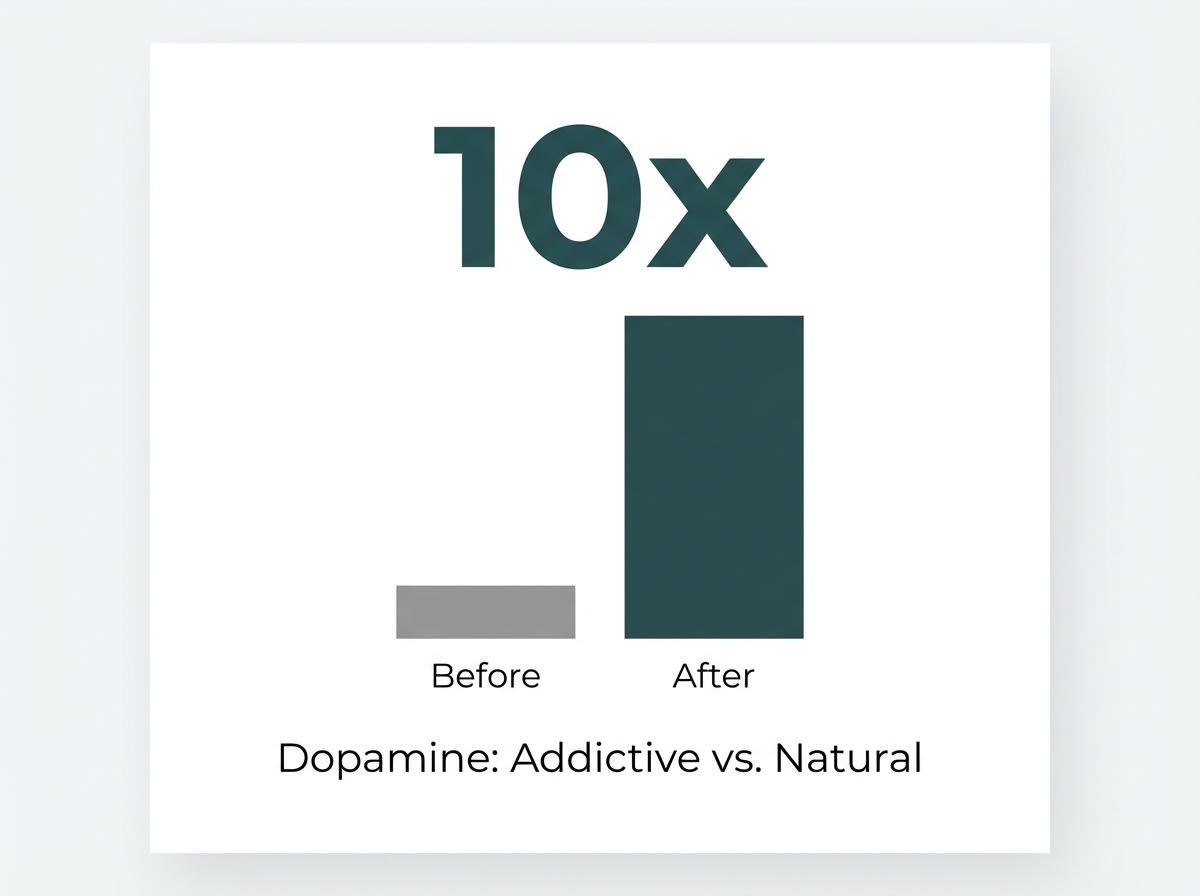
Think of your brain’s reward system like a thermostat. After repeated exposure to the “heat” of substance-induced dopamine, the thermostat breaks and can no longer register the gentle warmth of everyday joys. This biological adaptation makes early recovery feel flat or uninspiring. It is not a lack of willpower; it is a healing organ. Consequently, generating motivation for addiction recovery requires patience as your brain recalibrates to natural pleasure sources.8
“This isn’t about willpower or weakness; it’s a real, biological process. Early in recovery, this altered reward system can make it much harder to feel motivated by things that used to matter to you.”
Tool: The Dopamine Menu. To help your brain relearn, create a written list of “low-dopamine” rewards. These are small activities that bring a spark of joy, such as a hot cup of coffee, a short walk, or listening to a favorite song. consciously acknowledging these moments helps rewire your reward pathways, slowly strengthening your motivation for addiction recovery.
Evidence-Based Approaches That Enhance Motivation for Addiction Recovery
Motivational Interviewing Techniques
Motivational Interviewing (MI) is a collaborative approach designed to strengthen your own personal motivation for addiction recovery and commitment to a specific goal. Rather than imposing reasons for change upon you, MI helps you uncover your own “why.” It is particularly effective if you feel ambivalent or unsure about stopping substance use.5
You can apply MI principles on your own using a Decisional Balance Sheet. This tool helps clarify mixed feelings. Draw a table like the one below and fill it out honestly:
| Scenario | Benefits (Pros) | Costs (Cons) |
|---|---|---|
| Continuing Substance Use | (e.g., Temporary stress relief, social connection) | (e.g., Health issues, financial loss, relationship strain) |
| Changing (Recovery) | (e.g., Better health, pride, saving money) | (e.g., Dealing with emotions, losing drinking buddies) |
Seeing these factors written down often highlights that the “costs” of staying the same outweigh the “benefits,” which can spark a genuine increase in motivation for addiction recovery. This approach respects your autonomy and treats you as the expert on your own life.
Self-Determination Theory in Practice
Self-Determination Theory (SDT) suggests that sustainable motivation for addiction recovery relies on satisfying three core psychological needs: Autonomy, Competence, and Relatedness. When you feel forced into treatment, motivation is often short-lived. However, when you feel you have a choice (Autonomy), the skills to succeed (Competence), and support from others (Relatedness), your drive becomes internal and resilient.3
To apply this, use the ARC Checklist weekly to ensure your environment supports your recovery:
- Autonomy: Where did I make a choice today? (e.g., “I chose to go to the meeting,” rather than “I had to go.”)
- Competence: What is one small recovery skill I executed well this week?
- Relatedness: Who is one person I felt truly connected to recently?
Focusing on these three areas shifts your mindset from “compliance” to “empowerment,” significantly boosting your long-term motivation for addiction recovery.
Matching Strategies to Your Recovery Stage
Early-Stage Motivation Building Tools
In the early stages, motivation for addiction recovery is often fragile. You may be dealing with withdrawal, brain fog, or intense cravings. During this phase, rely on external structures and simple tools rather than waiting for “inspiration.”
Tool: The Readiness Ruler (Click to Expand)
Ask yourself: “On a scale of 1 to 10, how ready am I to change?”
If you answer 4, ask: “Why a 4 and not a 2?” (This forces you to verbalize your reasons for change).
Then ask: “What would it take to move from a 4 to a 5?” (This helps you identify one small, actionable step).
Another effective strategy for this stage is Contingency Management. This involves setting up immediate, tangible rewards for meeting goals—like treating yourself to a movie after a week of sobriety. Research confirms that in the early stages, when the brain’s reward system is healing, these external incentives effectively bridge the gap until internal motivation for addiction recovery takes over.9
Sustaining Motivation Through Action
As you stabilize, the goal shifts to maintenance. Sustaining motivation for addiction recovery requires moving from “thinking” to “doing.” Action often precedes motivation, not the other way around. If you wait until you “feel like it” to go to a meeting or the gym, you may never go.

Use a Weekly Action Planner to reduce decision fatigue. Dedicate 10 minutes on Sunday to fill out this simple template:
WEEKLY GOAL: Attend 3 support meetings.
| Day       | Action Item                   | Time   |
|-----------|-------------------------------|--------|
| Monday    | Call sponsor                  | 6:00 PM|
| Wednesday | Attend group therapy          | 7:00 PM|
| Friday    | Exercise / Nature Walk        | 5:30 PM|
Research indicates that individuals who actively participate in their recovery plan—through volunteering, meetings, or hobbies—maintain higher levels of motivation for addiction recovery.6 When you tick off these items, you provide your brain with visual proof of your progress.
Overcoming Common Motivation Obstacles
Addressing Co-Occurring Mental Health
It is difficult to build motivation for addiction recovery if you are simultaneously battling untreated depression or anxiety. These conditions can sap your energy and make the future look bleak. However, addressing them is not a detour; it is part of the path. Studies show that treating substance use and mental health together leads to significantly better engagement and outcomes.7
The Dual Check-In Tool:
Daily Question: “Is my lack of motivation today coming from a desire to use, or is it my depression/anxiety flaring up?”
Action: If it’s mental health, the solution might be rest or medication management. If it’s addiction, the solution might be a meeting.
If you notice persistent low moods interfering with your motivation for addiction recovery, speak to your care team immediately. Adjusting your treatment plan to support your mental health is often the key to unlocking your drive.
Leveraging Support Systems Effectively
Isolation is the enemy of motivation. Leveraging a support system is one of the most effective ways to protect your motivation for addiction recovery when your own internal reserves run low. Start by creating a Support System Map. List three categories of people: Professionals (therapists, doctors), Peers (recovery groups, sponsors), and Personal (family, friends).
Research highlights that a strong therapeutic alliance—feeling understood and supported by your counselors—is a top predictor of success.7 Furthermore, connecting with cultural or community groups can deepen your sense of belonging, which is a powerful fuel for motivation for addiction recovery.10
Scenario: If you are an introvert, you don’t need a large crowd. One trusted peer or mentor is enough. The goal is to have at least one person you can text when your motivation for addiction recovery dips, ensuring you don’t have to carry the burden alone.
Frequently Asked Questions
What if I feel motivated one day but completely unmotivated the next during addiction recovery?
It’s completely normal for your motivation for addiction recovery to feel strong one day and almost disappear the next. Motivation isn’t a fixed trait; it’s a process that naturally ebbs and flows based on your mood, environment, stress, or support system 2. If you notice these ups and downs, it doesn’t mean you’re failing or incapable—it’s actually expected in recovery. Try a daily check-in: rate your motivation from 1–10 and jot down what’s helping or making it harder. Over time, you’ll spot patterns and discover what lifts you up. Remember, every small effort counts, even on low-motivation days.
Can external pressure from family or the legal system actually help build motivation for addiction recovery?
External pressure from family or the legal system can sometimes help spark initial motivation for addiction recovery, especially when someone feels unsure about seeking help. Research shows that while outside incentives—like legal requirements or family encouragement—may get you in the door, the strongest, most lasting progress comes when motivation shifts from external to internal, rooted in your personal values and goals 3. For some, these outside influences create just enough momentum to start, but over time, it’s important to discover your own reasons for change. The best outcomes happen when both external support and internal motivation work together—so if external pressure brings you to treatment, that’s a valid starting point. What matters most is building your own sense of purpose as you move forward.
How can I maintain motivation for addiction recovery when my treatment program doesn’t align with my cultural or spiritual values?
You are not alone if you find it hard to maintain motivation for addiction recovery in a program that doesn’t reflect your cultural or spiritual beliefs. When treatment doesn’t honor your values, it can feel isolating or even discouraging. Research shows that programs integrating cultural traditions—like spiritual practices, ceremonies, or the involvement of respected community leaders—lead to better engagement and higher success rates for many people, especially in Indigenous communities 10. If your current program doesn’t offer this, try sharing your needs with your care team or seeking out support groups that celebrate your background. Connecting with your community or spiritual mentors outside the program can also help reinforce your motivation for addiction recovery and make your journey feel more meaningful.
What should I do when building motivation for addiction recovery feels impossible due to depression or anxiety?
When depression or anxiety makes building motivation for addiction recovery feel impossible, know that you’re not alone. Mental health struggles can drain your energy and hope, making even small steps seem overwhelming. The most important thing is to reach out—combine support for your mental health and recovery, not treat them separately. Research shows that addressing both together leads to greater improvements and helps you stay engaged in your recovery journey 7. Even a simple daily check-in with yourself or a trusted supporter can help you notice shifts in mood and motivation. Remember, asking for help is a sign of strength. Progress often starts with small, gentle steps.
How long does it typically take to develop consistent internal motivation for addiction recovery?
There’s no set timeline for developing consistent internal motivation for addiction recovery. For many people, motivation starts out uneven and grows gradually as you gain experience, build trust in yourself, and connect with supportive others. Research shows that motivation is a dynamic process—one that shifts in response to life events, mood, and the support you receive 2. Some people notice stronger, more steady motivation after a few weeks or months of treatment, while others find it takes longer. The key is to focus on progress, not perfection. Every honest effort helps your motivation get stronger and more reliable over time.
Is it normal to question whether I have enough motivation for addiction recovery while still in treatment?
Yes, it is absolutely normal to question whether you have enough motivation for addiction recovery—even while you’re still in treatment. Many people wonder if their motivation measures up or worry that doubts mean they aren’t ready. But motivation for addiction recovery isn’t something you either have or don’t; it shifts over time based on your experiences, mood, and support system 2. In fact, these questions are a healthy part of the process and can help you become more self-aware. By noticing and talking about these feelings, you’re actually strengthening your motivation step by step. Keep checking in with yourself and remember, progress is built on honest reflection.
Your Path Forward: Building Lasting Motivation
Building lasting motivation for addiction recovery isn’t about waiting for inspiration to strike—it’s about creating systems that support your commitment every single day. Start by identifying what truly matters to you. Whether it’s rebuilding relationships, pursuing career goals, or simply regaining your health, these personal values become your foundation when motivation wavers.
Establish specific systems to automate your success:
- Routine: A consistent morning routine (e.g., 10 minutes of meditation).
- Accountability: Weekly check-ins with your sponsor or therapist.
- Environment: Remove triggers and add visual reminders of your goals.
Break your recovery journey into manageable milestones. Celebrating small victories reinforces your progress and keeps motivation for addiction recovery alive. Set concrete markers like reaching 7 days sober, completing your first therapy session, or attending 30 consecutive support group meetings. Research from the Journal of Substance Abuse Treatment shows that individuals who track recovery milestones are 40% more likely to maintain long-term sobriety than those who don’t.
Your recovery journey is uniquely yours. The systems you build today become the foundation for lasting change tomorrow. You don’t need to have everything figured out right now. What you need is to take one meaningful action today: write down three personal values driving your recovery, schedule one accountability conversation this week, or identify one environmental change you can make in the next 24 hours. Your future self is counting on the choice you make in this moment.
References
- TIP 35 Enhancing Motivation for Change in Substance Use Disorder Treatment. https://library.samhsa.gov/sites/default/files/tip-35-pep19-02-01-003.pdf
- Chapter 1—A New Look at Motivation. https://www.ncbi.nlm.nih.gov/books/NBK571073/
- Application of Self-Determination Theory to Substance Use and Its Treatment. https://selfdeterminationtheory.org/wp-content/uploads/2024/05/2024_HerchenroederKrackeBockEtAl_ScopingReview.pdf
- Motives for Substance Use in Daily Life: A Systematic Review. https://pmc.ncbi.nlm.nih.gov/articles/PMC8386510/
- Motivational Interviewing and Enhancement Therapies. https://www.recoveryanswers.org/resource/motivational-interviewing-motivational-enhancement-therapies-mi-met/
- The Stages of Change – Brief Interventions and Brief Therapies. https://www.ncbi.nlm.nih.gov/books/NBK64942/table/A61041/
- THE ROLE OF THERAPEUTIC ALLIANCE IN SUBSTANCE USE TREATMENT. https://pmc.ncbi.nlm.nih.gov/articles/PMC3345301/
- Neurobiology of Addiction – StatPearls. https://www.ncbi.nlm.nih.gov/books/NBK597351/
- Contingency Management (CM). https://www.recoveryanswers.org/resource/contingency-management/
- Cultural interventions to treat addictions in Indigenous populations. https://pmc.ncbi.nlm.nih.gov/articles/PMC4158387/