Key Takeaways: Is Equine Therapy Trauma Treatment Right for You?
- The “Stuck” Factor: If you understand your trauma intellectually but still feel it physically (racing heart, tension), this somatic approach bridges that gap.
- Time to Impact: Research suggests noticeable improvements in emotional regulation often occur within 5 to 6 sessions.
- No Riding Required: 90% of the therapeutic work happens on the ground; you do not need equestrian experience.
- Immediate Action: Use the checklists below to assess your readiness and find a certified provider.
Understanding Equine Therapy Trauma Treatment
How Horses Help Process Traumatic Stress
Before reading further, rate your current state on a scale of 1-10:
- How often do you feel “on edge” or hyper-alert?
- How difficult is it to find words for your emotions?
If you scored 7+ on either, the non-verbal nature of equine therapy trauma treatment may be highly effective for you.
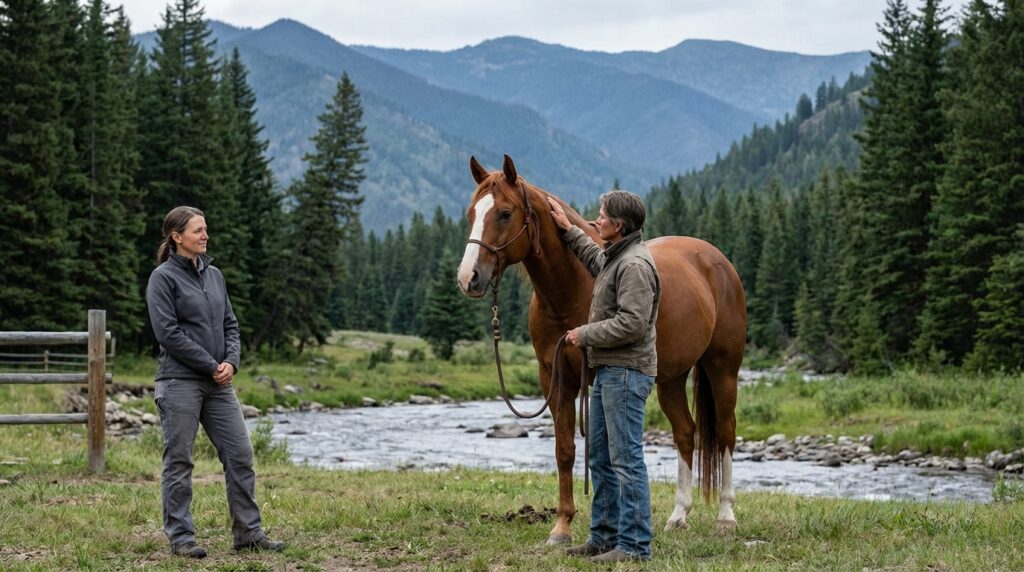
When you’re living with traumatic stress, it can feel like your entire body is on high alert. Horses offer something unique: an honest, non-judgmental presence that helps you feel safe. In equine therapy trauma sessions, the simple act of being near a horse can help your nervous system slow down. Horses naturally mirror human emotions through subtle body language, so when you start to calm, the horse responds in kind.
This interaction creates a powerful form of biofeedback, gently guiding you toward emotional regulation without saying a word. Many people find it tough to talk about trauma, especially early on. Equine therapy trauma provides a nonverbal way to process those overwhelming feelings. Instead of diving straight into words, you might notice:
- Your breathing matching the horse’s steady rhythm.
- The act of grooming or caring for the horse grounding you in the present moment.
- A physical sense of release in your shoulders or jaw.
Research shows that even five one-hour sessions with horses can lead to real improvements in post-traumatic stress symptoms, including lower heart rates and better emotional control1. This approach is ideal for anyone who feels stuck in traditional talk therapy or struggles to connect with people after trauma. You’re not alone—taking this path means giving yourself a new way to heal, one gentle step at a time.
The Science Behind Human-Horse Connection
Let’s look at what actually happens inside your body and mind when you connect with a horse during equine therapy trauma work. One powerful tool to help you notice this connection is a simple self-check: before and after your session, jot down how your heart feels, your breathing rate, and your overall sense of calm.

Click to learn: Why does the “Prey Animal” instinct matter?
Horses are prey animals, meaning their survival depends on being incredibly sensitive to their environment. They can detect a human’s heartbeat from several feet away. When you approach a horse with anxiety, they may back away. When you approach with calm, they draw near. This provides immediate, honest feedback on your internal state that humans often try to hide.
Many people are surprised to discover that just spending time with a horse can lower stress hormones like cortisol and boost oxytocin—the same hormone that helps you feel safe with trusted friends or family1. Scientists call this a biofeedback loop: your nervous system and the horse’s work together, helping you reset from a place of tension to one of safety. This science helps explain why equine therapy trauma is so effective for people who haven’t connected with traditional therapy.
Why Traditional Therapy Isn’t Always Enough
Traditional therapy has helped countless people work through mental health challenges, trauma, and life transitions. Talk therapy provides a safe space to process emotions, gain insights, and develop coping strategies. These cognitive approaches have proven effective for many—studies show that approximately 75% of people who enter psychotherapy experience some benefit.
However, many people find that while traditional therapy addresses their thoughts and feelings, something still feels incomplete in their healing journey. Despite understanding their patterns intellectually and making cognitive progress, they continue experiencing persistent symptoms that resist talk-based interventions alone. This is where equine therapy trauma approaches often succeed.
The limitation often lies in how trauma and deep emotional wounds are stored in the body. When you experience trauma, your nervous system responds by creating protective patterns that become embedded not just in your mind, but in your physical body. Consider Sarah, a successful marketing executive who spent three years in traditional therapy addressing childhood trauma. She could articulate exactly why she felt anxious in professional settings, yet every time she entered a conference room, her throat would constrict and her heart would race.
“Research in neuroscience has shown that traumatic experiences can become ‘stuck’ in the body’s memory systems. Dr. Bessel van der Kolk’s groundbreaking work in The Body Keeps the Score demonstrates that trauma is stored in subcortical brain regions responsible for emotional regulation and physical sensation—areas that aren’t easily accessed through talk therapy alone.”
You might notice similar patterns: tension in your shoulders during stressful conversations, a tight feeling in your chest when certain memories surface, or an unexplained sense of unease that logic alone cannot resolve. Traditional therapy typically focuses on the cognitive and emotional aspects of healing. You talk about what happened, explore why you feel certain ways, and work to reframe negative thought patterns. This cognitive approach is valuable, but it may not fully address the somatic imprints that trauma leaves behind.
Research with trauma survivors shows that approximately 30-40% of therapy clients reach a plateau where cognitive interventions stop producing meaningful change. When traditional therapy isn’t enough, it’s often because these physical manifestations of trauma remain unaddressed. Equine therapy trauma treatment bridges this gap by working with both mind and body together, addressing the full spectrum of how trauma affects you as a whole person.
What Happens During Equine Therapy Trauma Sessions
Activities That Build Emotional Regulation
Use this mental checklist during your first session:
- Breath: Is it shallow (chest) or deep (belly)?
- Tension: Are my hands clenched or open?
- Horse’s Reaction: Did the horse step away or lean in?
When you step into an equine therapy trauma session, the activities are designed to help you build emotional regulation in a way that feels safe and approachable. Sessions often begin with grooming or leading the horse—no riding experience needed. These tasks create a calm rhythm and require you to be present, which helps you notice when your mind starts to wander or anxiety rises.
As you become attuned to the horse’s reactions, you learn to spot and manage your own emotions. For example, if you’re feeling anxious, the horse may step away or become restless, offering real-time feedback that encourages you to pause, breathe, and try again with gentler energy. Over time, these small adjustments help you practice new coping skills in a supportive environment.
Research shows that equine therapy trauma sessions can lead to lower stress levels and improved emotional control, even after just a handful of sessions1. Common activities include:
- Obstacle Courses: Navigating the horse through barriers without touching them, symbolizing life challenges.
- Mindful Walking: Matching your gait and breath to the horse’s movement.
- Silent Observation: Simply standing quietly with the horse to experience calm and confidence in your body again.
Who Benefits Most from This Approach
You might be wondering if equine therapy trauma is the right fit for you or someone you care about. To help guide your decision, here’s a simple reflection tool:
Who Might Benefit Most? Quick Self-Check
- Do you feel disconnected from your body or emotions after trauma?
- Have traditional talk therapies felt overwhelming, unhelpful, or hard to stick with?
- Are you looking for a healing environment that feels nonjudgmental and safe?
- Would you benefit from a therapy that doesn’t rely solely on words?
If any of these sound familiar, equine therapy trauma could offer something new. Research shows this approach is especially helpful for people who have struggled with post-traumatic stress, including veterans, first responders, survivors of abuse, and those facing ongoing stress1. At-risk youth and people with substance use challenges have also experienced meaningful gains in emotional wellbeing, motivation, and self-confidence7, 4.
In fact, studies found that equine therapy trauma can produce benefits similar to traditional talk therapy, but with a unique ability to connect with those who feel stuck or resistant to standard approaches. This method works well for individuals who want to build trust again—both with themselves and others—or who need support in a hands-on, experiential environment.
Measuring Progress in Equine Therapy Trauma
Evidence-Based Results You Can Expect
Tracking your progress with equine therapy trauma is important, and there are clear, evidence-based ways to see results. One practical tool is a simple symptom tracker: record changes in sleep, anxiety, and mood each week. Research shows that equine therapy trauma can bring noticeable improvement in just a few sessions.
For example, a systematic review found that people living with post-traumatic stress saw clinical improvements—including lower heart rates and reduced symptoms—after only five one-hour sessions with horses1. For those who need encouragement, another study reported a 66.7% chance of lower PTSD scores after three weeks of therapeutic riding, which jumped to 87.5% after six weeks3.
| Metric | Traditional Talk Therapy | Equine Therapy Trauma |
|---|---|---|
| Primary Focus | Cognitive processing & verbal expression | Somatic experience & emotional regulation |
| Environment | Clinical office setting | Outdoors / Barn setting |
| Typical Timeline | Months to Years | Often shorter-term (8-12 weeks) |
These results aren’t limited to one group—at-risk youth and people with substance use challenges also experience gains in wellbeing and motivation. What really stands out is that the benefits of equine therapy trauma often match those of traditional talk therapy, but with a unique ability to reach people who feel stuck or disconnected.
Addressing Cost and Access Challenges
Addressing barriers to equine therapy trauma starts with knowing what to expect and how to advocate for your needs. A practical tool to help you get started is a barrier checklist. Ask yourself:
- Are there programs within reasonable driving distance?
- Does your insurance cover any part of treatment?
- Are there local nonprofits or scholarships for those needing financial support?
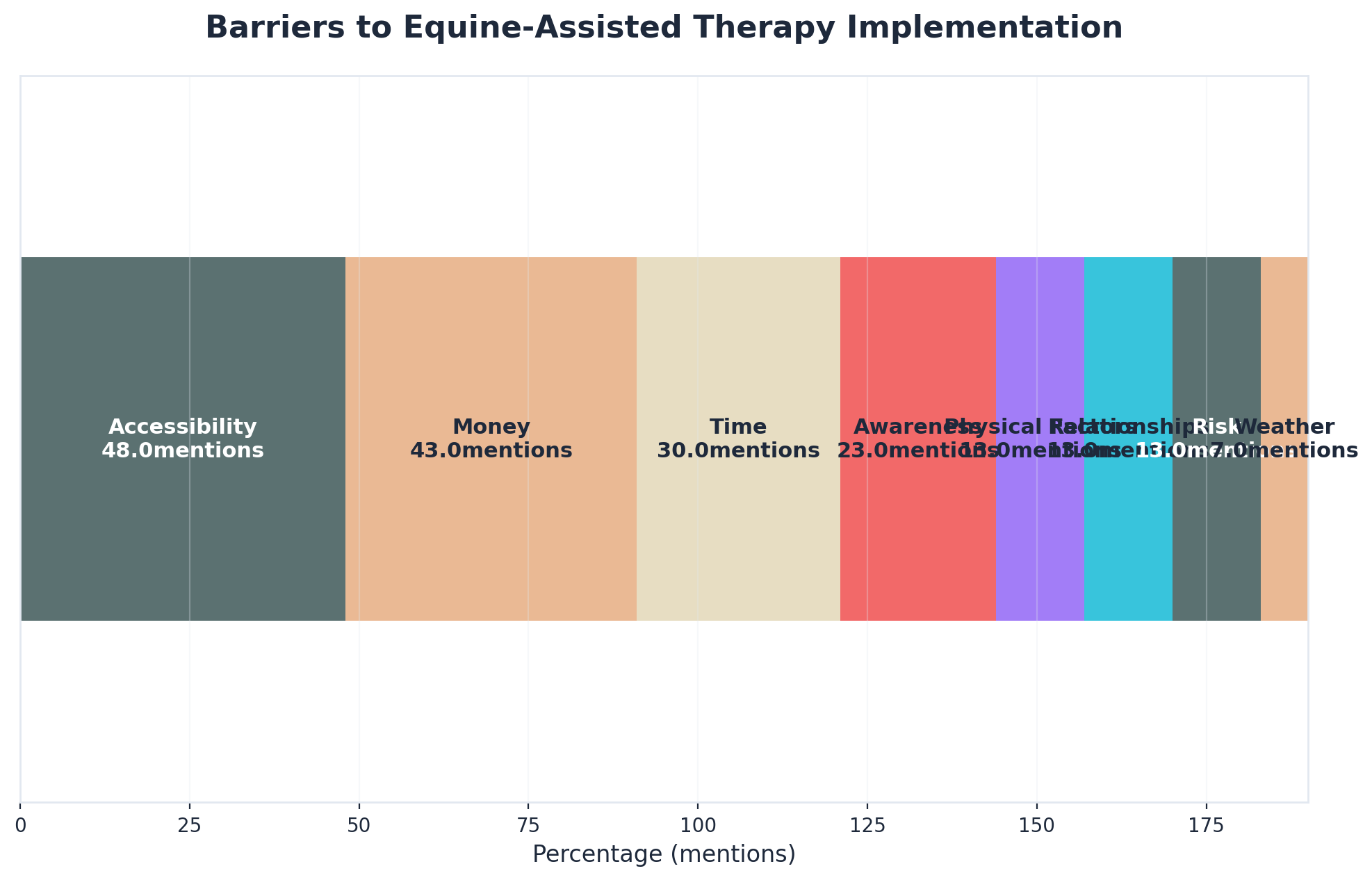
Research highlights that the most common challenges are accessibility and financial cost, with nearly half of participants in one study mentioning these as their biggest obstacles10. High session fees (often ranging from $150 to $300 per session depending on location) and limited insurance coverage can make equine therapy trauma seem out of reach, but don’t let that stop you from exploring options.
Some centers offer sliding scale payment plans or group sessions, which may reduce costs. In certain regions, partnerships between therapy centers and healthcare providers are expanding, which could increase insurance coverage and referrals in the near future5. If getting to a center is difficult, consider asking about virtual intake sessions or hybrid models that combine in-person and online support. Community-based organizations and veteran groups sometimes sponsor equine therapy trauma programs—reaching out for help is a brave and positive step.
Frequently Asked Questions
How do I choose between equine therapy trauma programs and traditional therapy approaches?
Choosing between equine therapy trauma programs and traditional therapy really depends on your personal needs and how you respond to different approaches. If you feel disconnected during talk therapy, struggle to express emotions, or want a more hands-on, experiential process, equine therapy trauma could be a better fit. Studies show that both methods often lead to similar improvements in emotional and psychological wellbeing, allowing you to pick the approach that feels safer and more engaging for you 7. Trust your instincts—if you’re feeling stuck, it’s okay to try something new. Remember, the right path is the one that helps you move forward with hope and support.
Can equine therapy trauma treatment help if I have both substance use challenges and PTSD?
Yes, equine therapy trauma treatment can be a supportive option if you’re facing both substance use challenges and PTSD. Research shows that individuals with these co-occurring issues often experience boosts in self-confidence, motivation, and emotional wellbeing after participating in equine therapy trauma sessions 4. This approach is especially helpful when talk therapy alone hasn’t worked or feels overwhelming. The nonjudgmental presence of horses, combined with experiential activities, helps you learn new coping skills and rebuild trust in yourself. Many people find that healing alongside horses makes it easier to stay engaged in recovery and feel hopeful about lasting change.
How many equine therapy trauma sessions will I need before seeing improvement?
The number of equine therapy trauma sessions you’ll need before seeing improvement varies, but research gives you a hopeful starting point. Many people notice positive changes after as few as five one-hour sessions, with benefits like calmer emotions and lower stress levels often appearing early in the process 1. In another study, 66.7% of participants reported fewer PTSD symptoms after just three weeks, and that number grew to 87.5% by six weeks 3. Still, your journey is personal—some find relief quickly, while others need more time. Every step you take with equine therapy trauma is progress worth acknowledging.
Do I need horse riding experience to participate in equine therapy trauma programs?
No, you do not need any horse riding experience to participate in equine therapy trauma programs. Most sessions are done on the ground—activities like grooming, leading, or simply being near the horse are just as powerful for healing as riding. Many people who start equine therapy trauma have never been on a horse before, and facilitators are there to guide you every step of the way. The focus is on building trust and connection, not riding skills. This makes equine therapy trauma accessible to people of all backgrounds and abilities, letting you engage at your own comfort level 1.
What should I look for when researching equine therapy trauma providers in my area?
When researching equine therapy trauma providers, start by checking for licensed mental health professionals and certified equine specialists working together—this partnership keeps both your safety and the horse’s wellbeing in focus. Ask about experience treating trauma specifically, and look for reviews or testimonials from people who have faced similar challenges. Reliable programs will be transparent about their approach and willing to answer questions about staff qualifications, emergency procedures, and animal care standards. Because the field isn’t always strictly regulated, choosing a provider with clear credentials and a team-based model helps you find support that’s both safe and effective 10.
Can equine therapy trauma treatment be combined with medication-assisted treatment?
Yes, equine therapy trauma treatment can be combined with medication-assisted treatment (MAT) for many people. In fact, research suggests that integrating experiential therapies like equine therapy trauma with MAT may boost engagement and motivation, especially for those dealing with substance use challenges or co-occurring mental health conditions 4. Always discuss your full treatment plan with your prescribing provider and therapist, as open communication ensures everyone is working together for your safety. Combining these approaches gives you a holistic path—supporting both your mind and your body—so you can heal at your own pace and celebrate every step forward.
Are there any physical or medical conditions that would prevent me from trying equine therapy trauma treatment?
Some physical or medical conditions might require caution or even prevent participation in equine therapy trauma sessions. Conditions like spinal instability, severe osteoporosis, uncontrolled epilepsy, or serious heart problems may make certain activities unsafe—especially those involving direct horse interaction or riding. If you have mobility challenges, sensory issues, or joint replacements, talk with your doctor and the therapy team before starting. Most programs will adapt activities so you can participate safely, but your health and comfort always come first. Honest communication about your medical history ensures your experience is both healing and safe 9.
Your Path Forward: Integrating Healing
The body keeps the score—and if you’ve experienced the physical manifestations of trauma we explored earlier, you already know this truth intimately. Those tension headaches, that chronic pain, the exhaustion that won’t lift—these aren’t separate issues from your emotional healing. They’re interconnected signals demanding an integrated response. This is precisely why your path forward must address healing at every level: mind, body, and spirit working together rather than in isolation.
Recovery isn’t a one-size-fits-all journey, and neither should your healing approach be. Integrating healing means combining evidence-based treatments with complementary therapies that address your whole self. This holistic path recognizes that lasting recovery requires more than managing symptoms; it demands understanding and healing the root causes of your struggles—especially those stored in your body.
You might begin with traditional therapy as your foundation, then incorporate specific somatic modalities designed to release trauma from your nervous system. Eye Movement Desensitization and Reprocessing (EMDR) helps reprocess traumatic memories by engaging your brain’s natural healing mechanisms. Somatic Experiencing teaches you to track and release physical sensations tied to past trauma. Body-based therapies like trauma-informed yoga or therapeutic massage address the muscle memory and tension patterns that talk therapy alone cannot reach. These aren’t optional add-ons—for many, they’re essential components that finally unlock healing that felt impossible through conventional approaches alone.
Integrating healing also means being patient with yourself. Some approaches will feel immediately helpful, while others may take time to show their value. You’re not looking for a quick fix—you’re building a sustainable framework for long-term wellness. Success in integrated healing looks different than you might expect: it’s the day you notice your shoulders aren’t perpetually tensed, the moment you realize you’ve slept through the night, the gradual return of joy in activities you’d abandoned.
This week, take one concrete step. Use the following search term to find a certified provider near you:
"EAGALA certified equine therapy trauma [Your City]"
By remaining open to different modalities and listening to what your mind and body need, you’ll create a personalized recovery path that honors your unique experience and supports your ongoing growth. Your body has been speaking—now it’s time to give it the integrated healing response it deserves.
References
- Equine-assisted interventions for veterans with posttraumatic stress disorder. https://pmc.ncbi.nlm.nih.gov/articles/PMC10654975/
- Horse-Caring Helps Veterans With PTSD. https://www.rutgers.edu/news/horse-caring-helps-veterans-ptsd
- How horse riding and equine therapy has helped PTSD sufferers. https://www.ptsduk.org/how-horse-riding-and-equine-therapy-has-helped-ptsd-sufferers/
- Equine-assisted services for individuals with substance use disorders. https://pmc.ncbi.nlm.nih.gov/articles/PMC9749232/
- How Much Does Equine Therapy Cost?. https://www.eagala.org/blog/equine-therapy-cost/
- Effects of Equine Therapy on Individuals with Autism Spectrum Disorder. https://pmc.ncbi.nlm.nih.gov/articles/PMC6178825/
- At-risk youth receive similar benefits from equine-assisted psychotherapy. https://pmc.ncbi.nlm.nih.gov/articles/PMC12069370/
- Equine-assisted learning and leadership transformation. https://pmc.ncbi.nlm.nih.gov/articles/PMC12685683/
- Are there any precautions or contraindications to EAS?. https://pathintl.org/faqs/are-there-any-precautions-or-contraindications-to-eat/
- Unbridled Healing: Identifying the Barriers of Equine-Assisted Therapy. https://scholarworks.uark.edu/cgi/viewcontent.cgi?article=1019&context=hdfsrsuht