

Key Takeaways
- Core Principles: Effective motivational interviewing relies on empathy, developing discrepancy, rolling with resistance, and supporting self-efficacy.
- OARS Technique: Mastering Open-ended questions, Affirmations, Reflections, and Summaries is essential for building client rapport.
- Evidence-Based: Research confirms medium effect sizes for substance use reduction and improved retention in dual diagnosis care.
- Language Matters: Distinguishing between “change talk” and “sustain talk” allows clinicians to guide conversations productively.
- Dual Diagnosis Application: The approach integrates seamlessly with medication management and trauma-informed care to support holistic recovery.
How Motivational Interviewing Works
Core Principles That Drive Change
Let’s ground your understanding of motivational interviewing with a quick self-assessment tool designed to evaluate your current clinical approach.
Self-Check: Are You Applying MI’s Core Principles?
- Do I express genuine empathy, even when clients are resistant?
- Am I supporting autonomy rather than pressuring for change?
- Can I identify and strengthen a person’s own reasons for change?
- Do I roll with resistance, or do I push back?
- Am I helping clients set goals that matter to them?
If you answered yes to most of these, you’re already weaving the heart of motivational interviewing into your work. Four key principles drive this approach: empathy, developing discrepancy, rolling with resistance, and supporting self-efficacy.
Empathy means deeply listening and showing understanding, especially when someone feels stuck. Developing discrepancy involves helping clients see the gap between their current behavior and their own goals—never using shame, but gently helping them notice the difference. Rolling with resistance is about respecting ambivalence; when clients push back, you stay curious and non-confrontational. Supporting self-efficacy means nurturing hope and confidence that change is possible—celebrate every effort, no matter how small.
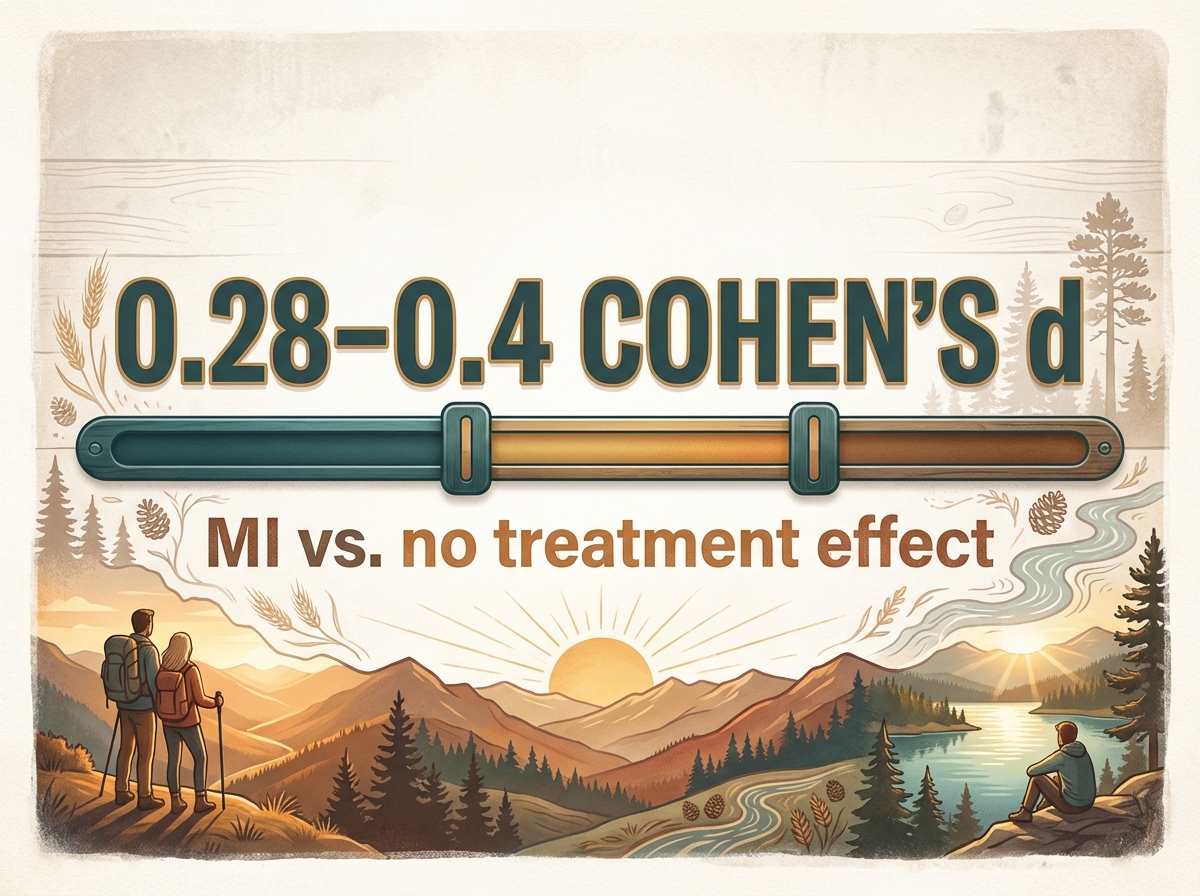
This approach is ideal for professionals who want to invite collaboration and reduce power struggles in sessions. Research shows that using these principles leads to medium effect sizes (Cohen’s d = 0.28–0.40) compared to no treatment, supporting real, measurable change for clients facing substance use challenges.6
Next, you’ll discover how the spirit behind these principles shapes every conversation.
The Spirit Behind the Technique
Let’s begin with a reflective tool to keep the focus on your own mindset as a practitioner:
Quick Check: Are You Embodying the Spirit of MI?
- Am I truly partnering with clients, or drifting back into directing?
- Do I approach each conversation with respect for autonomy?
- Do I listen more than I speak, especially when resistance shows up?
- Can I convey hope, even when progress feels slow?
If most of your answers are yes, you’re embracing the spirit that fuels motivational interviewing. The spirit behind this technique centers on partnership, acceptance, compassion, and evocation. Partnership means you walk alongside clients, creating a sense of collaboration instead of hierarchy. Acceptance involves honoring each person’s worth, strengths, and right to make their own choices—never judging or imposing your agenda.
Compassion is the commitment to act in the client’s best interest, even when the path gets tough. Evocation means you believe clients already have what they need for change, and your job is to help that wisdom surface. This approach works best when you’re aiming to build trust and reduce defensiveness—especially with clients who have experienced power imbalances or stigma in healthcare settings.
Many professionals find that adopting this spirit transforms not only the client relationship but also their own job satisfaction. Researchers emphasize that the spirit of motivational interviewing is what sets it apart from more directive methods, making space for genuine, lasting change.3
Next, we’ll look at the evidence that demonstrates why this approach is so effective across diverse populations.
Evidence Supporting Motivational Interviewing
Research Outcomes Across Populations
Let’s anchor this section with a quick benchmarking tool:
Snapshot Assessment: Are Your Outcomes on Par with MI Research?
- Do you track reductions in substance use at three, six, and twelve months?
- Are you documenting improvements in engagement or retention rates?
- Have you compared outcomes for different cultural or demographic groups?
Answering yes to these questions means you’re in step with leading research on motivational interviewing outcomes. Motivational interviewing stands out for its strong, consistent results across a wide variety of populations. A major meta-analysis covering 119 randomized controlled trials found that motivational interviewing delivered significantly better outcomes than no treatment, with medium effect sizes (Cohen’s d = 0.28–0.40) across diverse measures, from substance use reduction to improved mental health symptoms.6
These findings hold true whether you’re working with adults, adolescents, or families, in both group and individual formats. When applied with cultural sensitivity, motivational interviewing can close gaps in care. Some studies suggest minority populations may see even greater benefits, though the data is mixed and more targeted research is needed.9 This path makes sense for programs that serve multicultural or rural communities and want to reduce disparities in recovery outcomes.
Motivational interviewing isn’t just for substance use, either. Evidence supports its impact on medication adherence, chronic disease management, and mental health engagement.1 The approach is ideal for organizations aiming to support change across complex, overlapping needs.
Next, we’ll break down how the simple act of affirmation can be a game-changer in every clinical conversation.
Why Affirmation Shifts Conversations
Start with this quick affirmation checklist:
Affirmation in Action: Are You Using It Effectively?
- Do you notice and name clients’ strengths, not just progress?
- Are your affirmations specific, genuine, and focused on effort?
- Do you affirm even small steps, especially after setbacks?
- Are you comfortable offering affirmation without sounding patronizing?
If you’re saying yes, you’re already using affirmation to create momentum in your sessions. Affirmation, in the context of motivational interviewing, means intentionally recognizing a person’s efforts, values, and strengths. Instead of vague praise, you highlight something real—”You showed a lot of courage coming back after a tough week.” This isn’t just encouragement; it’s a targeted technique that can shift a client’s self-view and open them to change.
Research shows that affirmation is the only therapist behavior associated with both increased “change talk” (statements expressing desire or ability to change) and decreased “sustain talk” (statements in favor of staying the same).7 That makes affirmation especially powerful for tipping the scales toward motivation and away from resistance.
Consider this route if you want to nurture hope, reduce shame, and create safety in conversations where clients may feel vulnerable or defeated. For those working with co-occurring disorders or trauma, affirmation becomes an anchor—reminding clients that every step, no matter how small, is a step worth celebrating.
Next, you’ll explore how foundational dialogue techniques set the stage for meaningful change.
Key Motivational Interviewing Techniques
OARS: The Foundation of Dialogue
Let’s ground this section with a practical tool you can use in every session:
OARS Quick Reference Checklist:
- Open-Ended Questions: Am I inviting fuller responses, rather than yes/no answers?
- Affirmations: Do I recognize the client’s strengths and efforts?
- Reflections: Am I echoing back what I hear, to show understanding?
- Summaries: Do I pull together key points to clarify and reinforce?
If you’re using all four regularly, you’re laying a strong foundation for motivational interviewing. OARS stands for Open-Ended Questions, Affirmations, Reflections, and Summaries. These are the building blocks that keep conversations open, respectful, and client-centered. Open-ended questions invite clients to explore, reflect, and share more of their story.
Affirmations highlight strengths—”You’ve shown real commitment,” for example—helping to build a sense of capability. Reflections allow you to check for understanding and demonstrate empathy, while summaries bring clarity, helping both parties stay focused on what matters most. This strategy suits clinicians who want to move beyond advice-giving into deeper, collaborative dialogue.
Using OARS can transform sessions with clients who may be unsure, ambivalent, or even resistant to change. Research consistently shows that these foundational techniques, when practiced with intention, are linked to better engagement and improved outcomes in substance use treatment.4 Expect to invest time up front—mastering OARS requires practice, feedback, and a bit of patience. But every effort here pays off; each skill adds confidence to your toolkit and supports more effective motivational interviewing.
Next, you’ll discover how to distinguish and respond to change talk versus sustain talk, sharpening your ability to guide conversations toward positive action.
Recognizing Change Talk vs. Sustain Talk
Let’s use a simple identification tool to sharpen your ear for client language. Recognizing the difference between change talk and sustain talk is vital for effective motivational interviewing.
| Client Statement | Classification |
|---|---|
| “I want to stop using, but I don’t think I can.” | Change Talk (Desire/Need) |
| “Things are fine the way they are.” | Sustain Talk (Status Quo) |
| “I’ve done this before, and it never works.” | Sustain Talk (Barrier) |
| “Maybe I could try cutting back.” | Change Talk (Ability/Plan) |
| “My family is worried about me.” | Change Talk (Reason) |
Change talk refers to statements that hint at a desire, ability, reason, or need for change—signals that ambivalence is shifting. Sustain talk, on the other hand, expresses arguments for maintaining the status quo or reasons not to change. Being able to distinguish these forms of language allows you to gently guide sessions: when you hear change talk, reflect and reinforce it to build motivation; with sustain talk, stay curious and nonjudgmental, helping clients explore their ambivalence without pressure.
Research demonstrates that techniques focusing on amplifying change talk—while respectfully acknowledging sustain talk—lead to greater client engagement and better treatment outcomes.7 Prioritize this skill when you’re working with clients who feel stuck, resistant, or overwhelmed by the prospect of change. Yes, it takes practice to listen for these subtle cues, but every time you spot a glimmer of change talk, you’re helping to tip the balance toward hope and action.
Next, we’ll explore how these techniques play out in integrated care for dual diagnosis clients.
Implementation in Dual Diagnosis Care
When you’re considering treatment for co-occurring mental health and substance use challenges, understanding how motivational interviewing functions within dual diagnosis care becomes essential to your recovery planning. Motivational interviewing offers flexibility that meets you exactly where you are in your journey—whether you’re questioning the need for change or actively working toward transformation.
In dual diagnosis settings, you’ll experience motivational interviewing woven throughout your treatment:
- Individual Therapy: Clinicians use motivational interviewing techniques to help you explore connections between mental health symptoms and substance use patterns. This collaborative approach helps you identify your own reasons for change rather than feeling lectured or judged.
- Group Therapy: Facilitators trained in motivational interviewing guide discussions without forcing outcomes, allowing the group’s collective wisdom to emerge. You might find yourself reconsidering your readiness for change simply by witnessing someone else’s breakthrough moment.
- Medication Management: When considering medically assisted treatment or psychiatric medications, motivational interviewing helps you weigh benefits and concerns honestly. Treatment providers use this method to understand your hesitations, address misconceptions, and support informed decision-making.
- Family Sessions: Your care team helps loved ones learn to ask curious questions instead of making demands. When your family understands how to use reflective listening and affirm your strengths, home becomes a place that reinforces recovery rather than triggering defensiveness.
Treatment planning itself becomes more effective with motivational interviewing-informed approaches. Instead of the clinical team dictating what you need to work on, you collaborate to identify goals that genuinely matter to you. This ownership makes a significant difference in engagement. You’re more likely to show up for therapy, complete assignments, and stay committed when the goals reflect your values and priorities.
The trauma-informed aspects of dual diagnosis care align perfectly with motivational interviewing. Both approaches emphasize safety, collaboration, and empowerment. When you’ve experienced trauma, feeling controlled or pressured can trigger past wounds. Motivational interviewing’s respectful, autonomy-supporting style helps you feel safe enough to explore difficult topics and make vulnerable changes.
Throughout your treatment experience, you’ll notice how motivational interviewing creates consistency. Whether you’re participating in cognitive behavioral therapy, dialectical behavioral therapy, or creative therapies like art or music therapy, the underlying motivational interviewing spirit remains constant. This consistency helps you develop trust and opens pathways for genuine transformation across all aspects of your healing journey.
Frequently Asked Questions
How many sessions does motivational interviewing typically require to see results?
Most clients begin noticing benefits from motivational interviewing within a short series of sessions. Research on Motivational Enhancement Therapy (a structured adaptation of MI) suggests that four to six sessions are often enough to see measurable changes in motivation and readiness for change 5. Of course, the specific number will vary—some individuals respond to a single, focused session, while others may need ongoing support over several weeks. This approach works best when you can tailor the session count to client needs, clinical setting, and the complexity of co-occurring conditions. Remember, even brief MI interventions can spark meaningful shifts in perspective and engagement.
Can motivational interviewing be effectively combined with medication-assisted treatment?
Yes, motivational interviewing can be effectively combined with medication-assisted treatment (MAT)—in fact, the two approaches often complement each other well. Motivational interviewing supports individuals in exploring their feelings about medications, addressing ambivalence, and building intrinsic motivation to stick with MAT regimens. This strategy suits clinicians who want to foster trust and empower clients, especially when there’s hesitancy about starting or continuing medication. Research indicates that pairing motivational interviewing with MAT improves medication adherence, treatment retention, and overall recovery outcomes for substance use disorders 1. When you blend these methods, you create a safe, collaborative space that honors each person’s pace and unique recovery journey.
What makes motivational interviewing different from traditional confrontational approaches?
Motivational interviewing stands apart from traditional confrontational approaches by building change through collaboration, not conflict. Instead of arguing, warning, or confronting resistance directly, you invite clients into a partnership where their perspective is respected and their autonomy is central. This method avoids shaming or pressuring, focusing instead on drawing out the person’s own reasons and capacity for change. Research highlights that the spirit of motivational interviewing—empathy, evocation, and support for self-efficacy—creates a more open, hopeful environment that fosters lasting engagement and real progress 3. If you want to reduce defensiveness and nurture trust, this solution fits your practice.
How do clinicians measure progress when using motivational interviewing techniques?
Clinicians measure progress with motivational interviewing by blending structured assessments and practical observation. You might track shifts in client language—such as an increase in “change talk” or a decrease in “sustain talk”—during sessions, since research links these changes to better outcomes 7. Standardized tools like the Readiness Ruler or session rating scales can help quantify motivation, confidence, or engagement over time. Some programs monitor concrete indicators such as session attendance, goal attainment, or substance use reduction at key checkpoints. This approach is ideal for teams who want both a clear picture of client movement and real-time feedback to celebrate small wins. Remember, progress may look different for each individual, so flexibility and encouragement matter.
Is motivational interviewing effective for individuals who aren’t ready to change?
Absolutely—motivational interviewing is designed to meet individuals right where they are, even if they aren’t ready to change. Instead of pushing for immediate action, this approach gently explores ambivalence and honors a person’s autonomy. You validate that hesitation is normal, and use reflective listening and open questions to help clients clarify their own values and goals. Research confirms that motivational interviewing can spark meaningful shifts in motivation and readiness, even among those who initially express little interest in change 1. This method works when you want to plant seeds of hope and possibility, no matter how stuck things might feel.
How does motivational interviewing adapt for virtual treatment settings?
Motivational interviewing adapts well to virtual treatment settings by focusing on connection and collaboration, even when you’re working through a screen. Clinicians often use video conferencing, secure messaging, and digital worksheets to create a warm, supportive environment. This approach is especially helpful when clients live in rural areas or face barriers to in-person care. To maintain engagement, practitioners use more frequent check-ins, flexible scheduling, and creative ways to read nonverbal cues online. Research confirms that motivational interviewing remains effective in virtual formats, supporting strong outcomes in substance use and mental health treatment across diverse settings 1. Every effort you make to preserve empathy and partnership online truly counts.
Your Path Forward with MI-Informed Care
Taking the next step toward recovery means finding treatment that truly sees all of you—not just your substance use, but the mental health challenges that come with it. When you choose care informed by motivational interviewing, you’re choosing a path that honors your autonomy while providing the structure and support you need to heal both conditions simultaneously.
What does motivational interviewing look like in practice at a dual diagnosis treatment center? It means your therapist asks open-ended questions that help you explore your own reasons for change rather than telling you what you should do. It means group facilitators acknowledge your ambivalence about medication-assisted treatment without judgment, then help you weigh the pros and cons based on your values. It means your care team celebrates when you attend three sessions in a row, recognizing that consistency itself is progress—even if you’re still using. This person-centered approach creates space where your voice matters, your concerns are heard, and your goals guide the journey forward.
As you evaluate dual diagnosis programs, look for specific markers of authentic motivational interviewing integration. Ask potential treatment centers: “How do your staff handle resistance or ambivalence?” Programs truly grounded in MI principles will describe collaborative responses rather than confrontational ones. Inquire about staff training—are clinicians certified in motivational interviewing techniques, or is it just mentioned in marketing materials? Notice whether intake conversations feel like interrogations or explorations.
The best MI-informed care combines this collaborative spirit with holistic, integrated approaches that address your physical health, mental wellness, spiritual needs, and social connections as interconnected parts of your whole self. Recovery isn’t about following someone else’s timeline or meeting external expectations. It’s about discovering your own reasons for change and building the skills to sustain them. Whether you’re just beginning to explore treatment options or you’re ready to commit fully, motivational interviewing adapts to your unique needs and circumstances. You’ve already taken an important step by learning about this approach. That curiosity and willingness to explore what’s possible? That’s exactly the kind of internal motivation that MI-informed dual diagnosis care is designed to strengthen and sustain.
References
- Motivational interviewing—an evidence-based, collaborative, goal-directed behavioral therapy approach. https://pmc.ncbi.nlm.nih.gov/articles/PMC10189272/
- Efficacy of Motivational Interviewing to Improve Utilization of Mental Health Services in Pediatric Populations. https://jamanetwork.com/journals/jamanetworkopen/fullarticle/2784614
- Toward a Theory of Motivational Interviewing. https://pmc.ncbi.nlm.nih.gov/articles/PMC2759607/
- Chapter 3—Motivational Interviewing as a Counseling Style. https://www.ncbi.nlm.nih.gov/books/NBK571068/
- Effect of Motivational Enhancement Therapy (MET) on the self-efficacy of individuals with alcohol dependence. https://pmc.ncbi.nlm.nih.gov/articles/PMC8132760/
- Motivational Interviewing: An Evidence-Based Approach for Use in Clinical Care. https://pmc.ncbi.nlm.nih.gov/articles/PMC8200683/
- Which individual therapist behaviors elicit client change talk and sustain talk in motivational interviewing sessions. https://pmc.ncbi.nlm.nih.gov/articles/PMC4936274/
- Motivational Interviewing and Self-Determination Theory. https://selfdeterminationtheory.org/SDT/documents/2005_MarklandRyanTobinRollnick_MotivationalInterviewing.pdf
- Cultural Adaptations of Motivational Interviewing: A Systematic Review. https://pmc.ncbi.nlm.nih.gov/articles/PMC10161132/
- Mechanisms of change in Motivational Interviewing: A review of empirical evidence. https://pmc.ncbi.nlm.nih.gov/articles/PMC2756738/